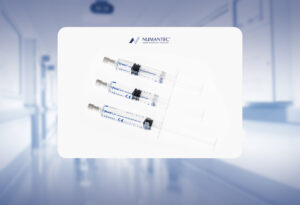

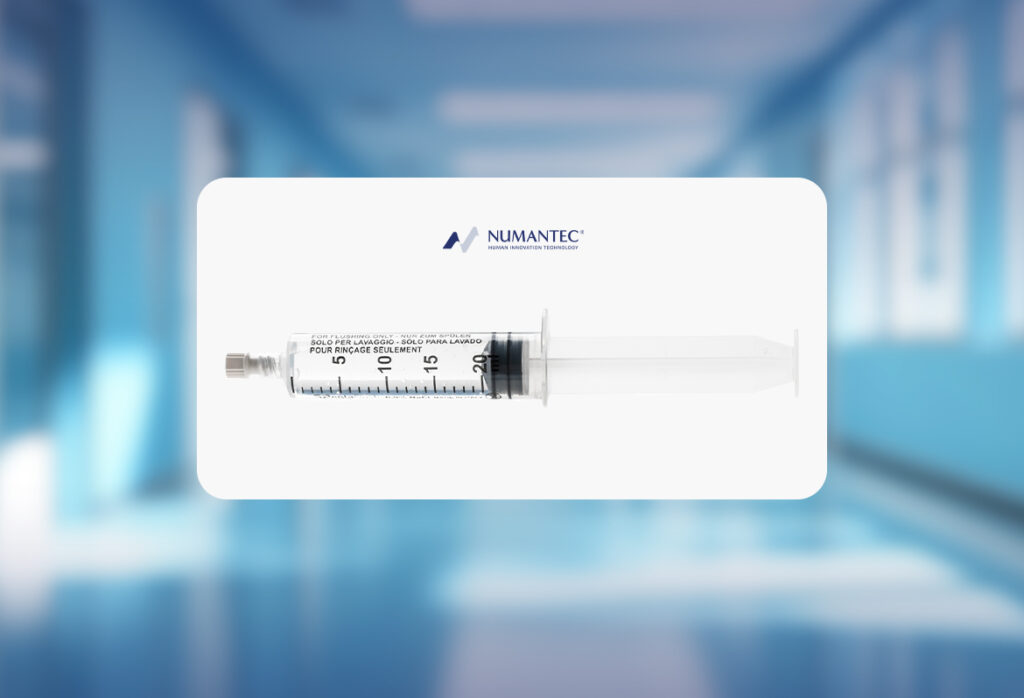
Pre-filled saline syringes are commonly used to:
- Maintain the patency of venous accesses such as peripheral and central catheters
- Flush infusion devices before, during, and after the administration of medications or fluids
- Reduce the risk of catheter occlusion
- Promote proper functioning of the infusion system
The Advantages
The use of pre-filled saline syringes offers numerous advantages over traditional manually filled syringes:
- Being sterile and ready to use, they significantly reduce the risk of contamination during preparation.
- They also eliminate the manual preparation step (filling the syringe from a vial or bottle), speeding up routine procedures.
In addition:
- Each syringe is single-use and individually packaged, minimizing the risk of cross-contamination.
- Each syringe contains a predetermined and accurate amount of saline solution, ensuring consistency and accuracy across administrations.
Furthermore, many clinical protocols now recommend the use of pre-filled devices to reduce administration errors and catheter-related infections.
Optimizing Procedures
In venous access management, flushing with saline solution is a simple yet essential procedure to prevent complications such as occlusions, thrombosis, or catheter-related infections. Pre-filled syringes enable healthcare professionals to focus more on patient care by ensuring fast, safe, and standardized procedures.
Furthermore, their use is especially valued in high-acuity care settings, such as intensive care units, oncology departments, and emergency rooms, as well as in home care, where practicality and the reduction of error risk are essential.
Numantec offers a wide range of pre-filled syringes containing 0.9% NaCl saline solution in different sizes (3ml, 5ml, 10ml). A 20 ml option is also available, ideal for flushing after the infusion of viscous solutions or following blood sampling. Additionally, the pre-filled syringes come in both single sterile and double sterile versions.
Pre-filled saline syringes represent an innovative and practical solution. They enhance both efficiency and safety in vascular access management procedures.